Nashra vs Kit
Real publishing on top of real automations.
Kit (formerly ConvertKit) is an automation engine with email attached. Nashra is a publishing surface with the same automation depth — and a built-in blog.
Free up to 500 subscribers.
Everything you'd leave Kit to get.
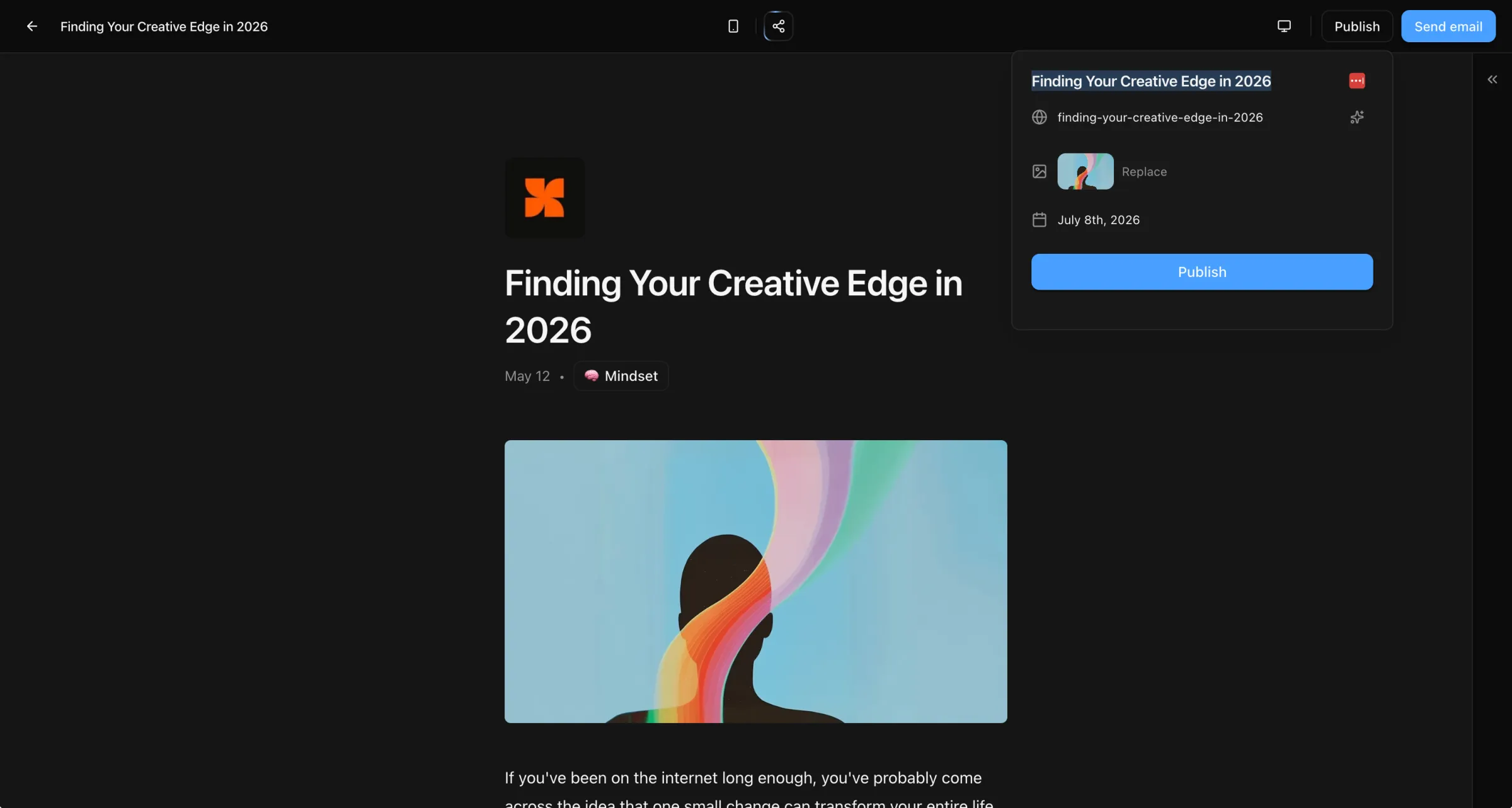
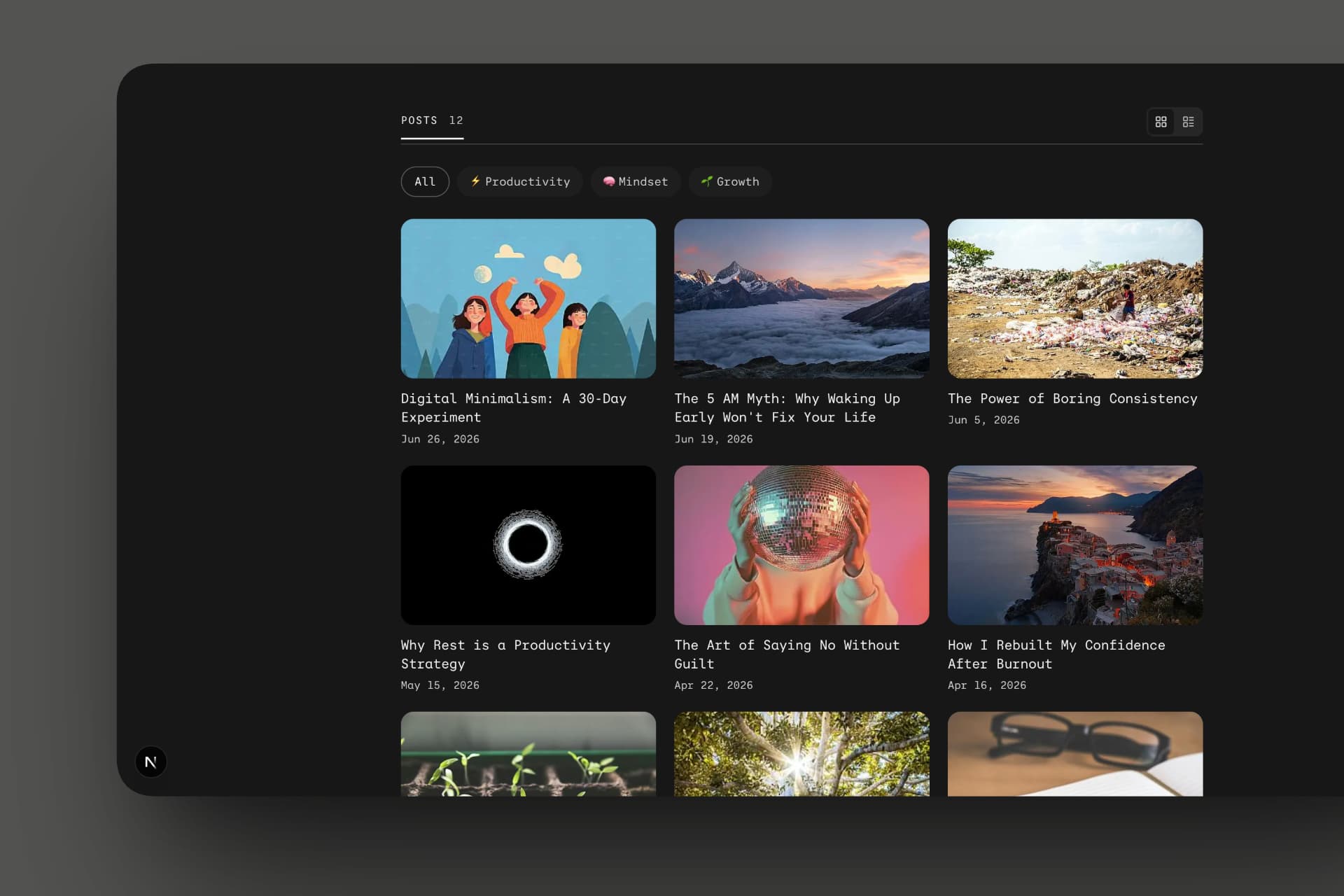
A real blog, at your domain with Publisher
Header, categories, featured posts, a subscribe modal, tuned for search. Kit sells you forms and broadcasts; the blog is someone else's job.
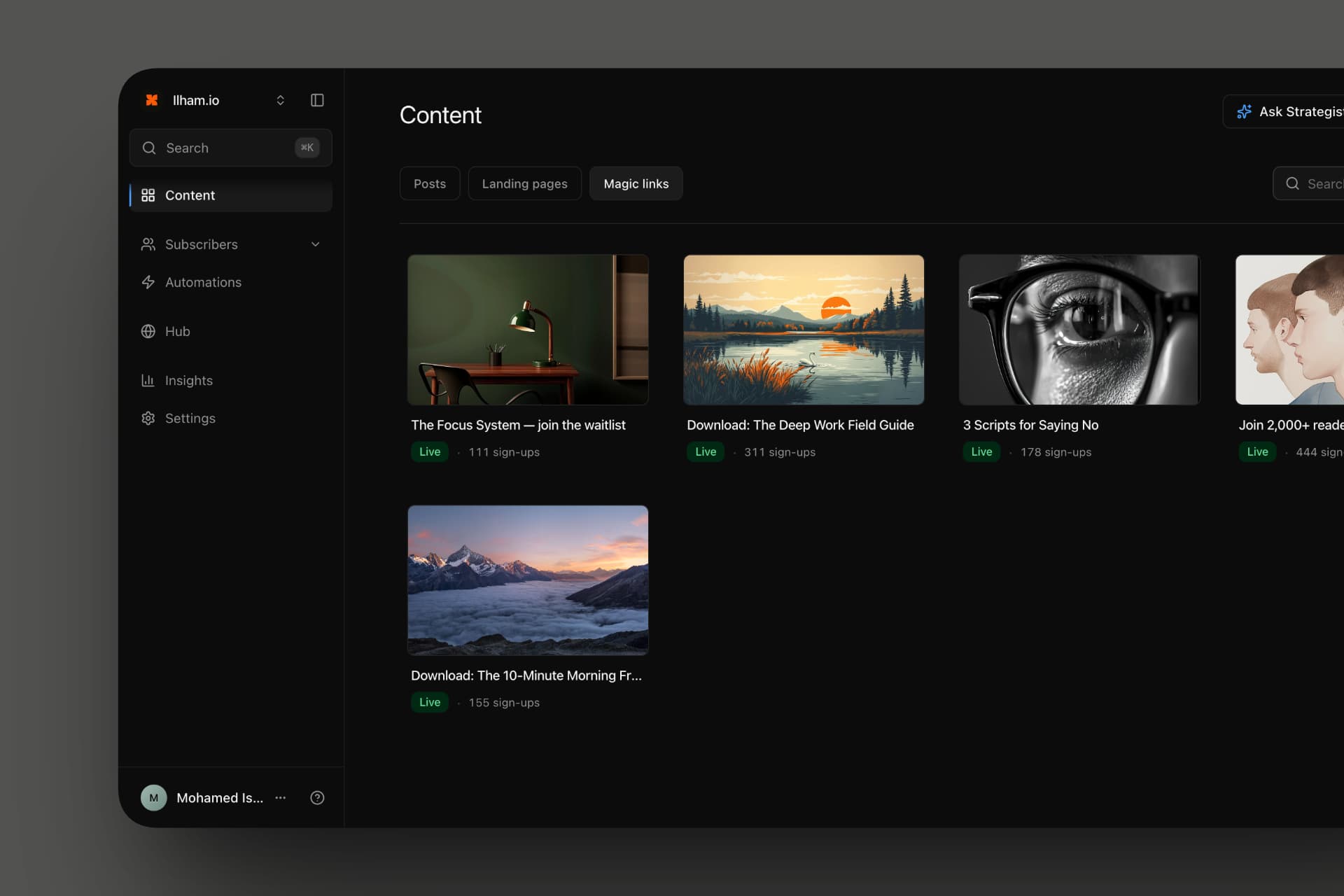
Lead magnets without the wiring
One Magic Link: hosted page, auto-tag on signup, file delivered to the inbox. Kit makes you glue a form, a tag, and a sequence together.
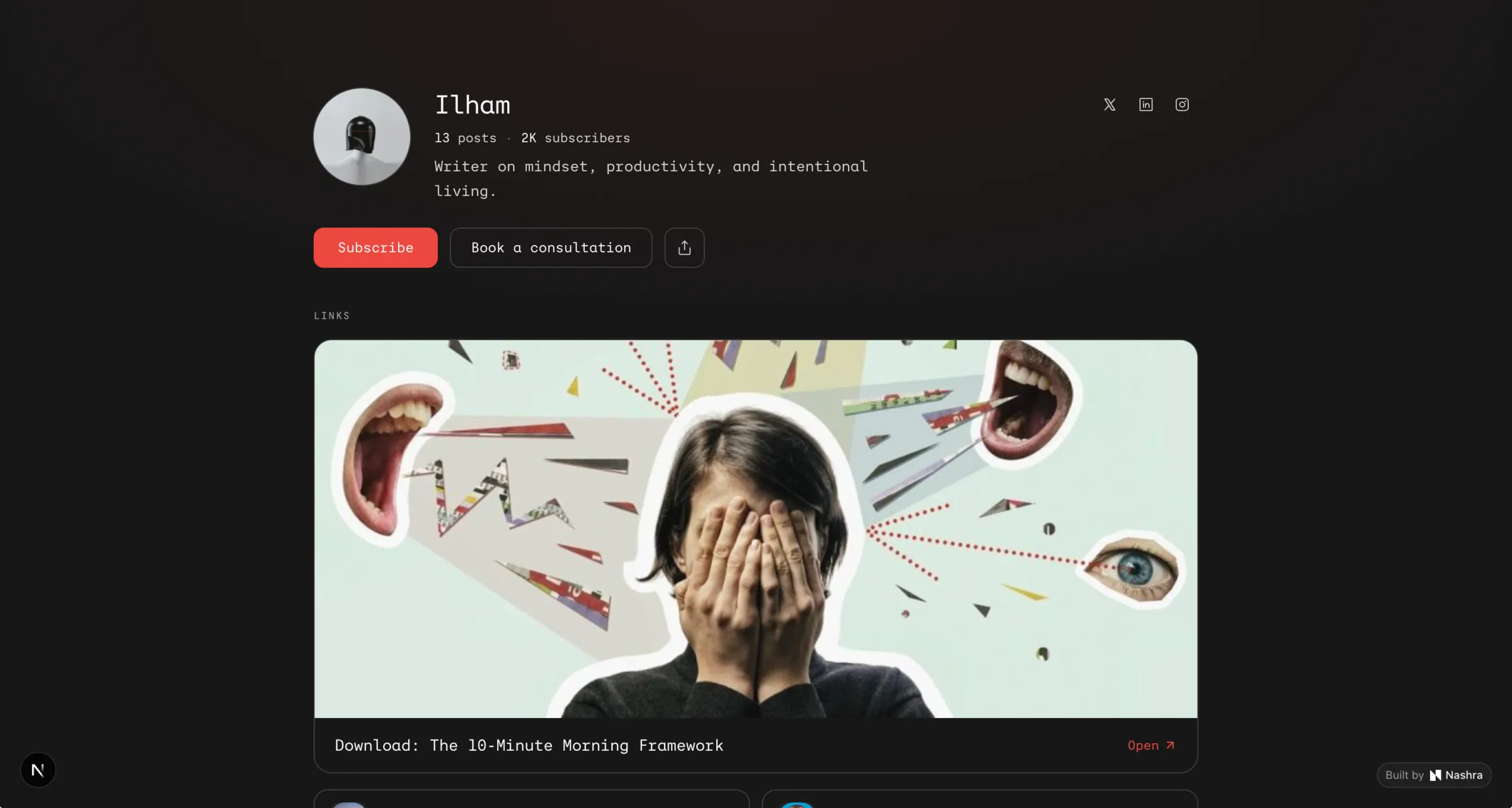
Your Hub, bio and blog in one
Your bio link and your writing on one page at your domain on Publisher, capturing emails instead of clicks. It looks like you, not like a form tool.
The latest, shipped in 2026.
The publishing hub keeps shipping. Here is what landed this year.
AI landing-page composerNew
Describe the offer; the AI drafts a real page from blocks. You edit and publish.
AI subject linesNew
The send dialog suggests subject lines drawn from your draft.
Open heat mapNew
See when subscribers open, hour by hour, and send at the best time.
The HubNew
Bio, blog, and subscribe point on one page, with unified analytics.
Global search
A command palette that jumps to posts, pages, subscribers, and settings.
Public API + SDKs
A REST API with official Node.js and Laravel SDKs, on every plan.
Custom domains, rebuilt
Root or subdomain, copyable DNS, sending identity moves the moment it verifies.
Subscriber Cleanup
Scan for spam signups, review the flags, and quarantine in bulk.
Nashra MCP serverNew
Connect AI assistants to your workspace over MCP.
Native RTLUnique
Arabic and Farsi layouts flip on their own. No plugin, no CSS.
Visual automations
Welcome flows and tag-based sequences, drawn on a drag-and-drop canvas.
AI Strategist
Reads your sends and says what's landing. It never drafts for you.
Every line item. No fine print.
Side by side, section by section.
Which one fits you.
PICK NASHRA IF
you want a real blog at your domain, write long-form for both inbox and web, and want a modern editor without bolting on a CMS.
PICK KIT IF
you sell digital products through your list and your monetization stack (paid courses, tip jars, commerce) is the spine of the business.
Where Kit is stronger.
No comparison is honest without this part.
Native commerce
Selling digital products, courses, and tips inside the same dashboard is a Kit primitive. Nashra integrates with checkout tools — different model.
Deeper trigger library
Kit has more automation triggers (purchase events, link clicks, complex tag logic). Nashra's three triggers cover most real-world flows but the library is intentionally smaller.
Larger ecosystem
Kit is older. More plugins, more agencies, more documentation in the wild. Nashra is younger and tighter.
One flat fee.
 Kit
KitAlready on Kit? We move it for you.
Export your list and your archive from Kit. We set up the domain, port the posts, redirect old URLs, and check the first send before it goes out. Free white-glove on Publisher, most moves done inside 48 hours.
Switching from Kit.
The honest answers. Write to us if something here doesn't cover it.
Other comparisons
Looking at the rest of the field?
 Nashra vs Beehiiv
 Nashra vs Substack
 Nashra vs Ghost
 Nashra vs Mailchimp
 Nashra vs Mailerlite
 Nashra vs Linktree
 Nashra vs Carrd
Try it for a week. Decide for yourself.
Free up to 500 subscribers, forever. Credit card required only for sending emails. Bring your list, your domain, your archive.
Create your Hub